
Latest News
Election Stress and Online Habits: A Look at Pornhub’s 2024 Traffic Patterns
Election Day isn’t just about casting votes—it’s also a day where emotions run high, routines shift, and stress levels soar. Fascinating insights into these dynamics come from an unlikely source: Pornhub’s 2024 Election Day traffic data. By examining patterns in adult site traffic, we can explore potential links between collective emotional states, voter behavior, and the broader cultural context of a high-stakes election.

Morning Traffic Surge: A Pre-Voting Stress Relief?
On Election Day morning, Pornhub traffic spiked by up to 15%. This uptick could reflect a need for stress relief before facing the tension of voting and awaiting results. For many, visiting an adult site in the morning might serve as a way to mentally prepare for the day ahead, especially during a contentious election cycle like 2024.
This pre-election activity could hint at voters trying to balance their personal anxiety with a desire to engage in civic duty. It also raises questions about how people manage their emotions during pivotal national events.
Evening Drop: Total Focus on the Polls
The most striking trend occurred in the evening, when Pornhub traffic dropped by as much as 19%. This aligns with polling locations closing and election results starting to come in. Such a sharp decline suggests a collective shift in focus toward real-time election coverage.
This drop might also reflect heightened emotional investment among certain voter bases. For instance, Donald Trump’s 2024 campaign heavily relied on emotive rhetoric, energizing his supporters. If his base was particularly motivated and active, this could explain why they were glued to election results rather than seeking their usual online distractions.
Late-Night Spike: Processing the Results
By 3 a.m., as Trump’s victory became increasingly apparent, Pornhub traffic spiked again, reaching 11% above average. This late-night surge could indicate people returning to familiar routines after hours of intense focus. For some, it might have been an outlet to process emotions—whether relief, stress, or resignation.
This pattern also underscores how major events like elections can disrupt regular habits and create unique behavioral rhythms that ripple through society.
What These Patterns Suggest About Voter Behavior
While Pornhub traffic patterns cannot directly influence election outcomes, they provide a fascinating glimpse into the public’s emotional state during a highly charged day. The drop in traffic during critical voting and result-watching periods could imply a motivated electorate deeply engaged in the process.
For Trump’s supporters, who rallied around his campaign’s strong emotional messaging, this heightened focus might reflect their determination to see their candidate succeed. The traffic drop may suggest that the public prioritized participation and real-time engagement with the election over other distractions.
A Window Into Election Day Stress
This analysis highlights how societal stress and engagement manifest in surprising ways during pivotal moments. The intersection of digital behavior and civic activity opens a new lens to study public emotions, motivations, and collective focus during elections.
While countless factors contributed to Trump’s 2024 victory, from campaign strategies to voter turnout efforts, the Pornhub data offers a unique glimpse into how the nation processes high-stakes events. Whether through stress relief, intense focus, or late-night unwinding, these patterns paint a picture of an electorate emotionally invested in the outcome of a historic election.
Source: betanews.com
































Latest News
Diva Traffic: Traffic Services Shut Down on February 20, 2026
Everything is changing in the camming industry. As a clear example, after years of being known as a traffic company—especially for promotion within the adult cams space—2026 is the year the industry says goodbye to Diva Traffic!
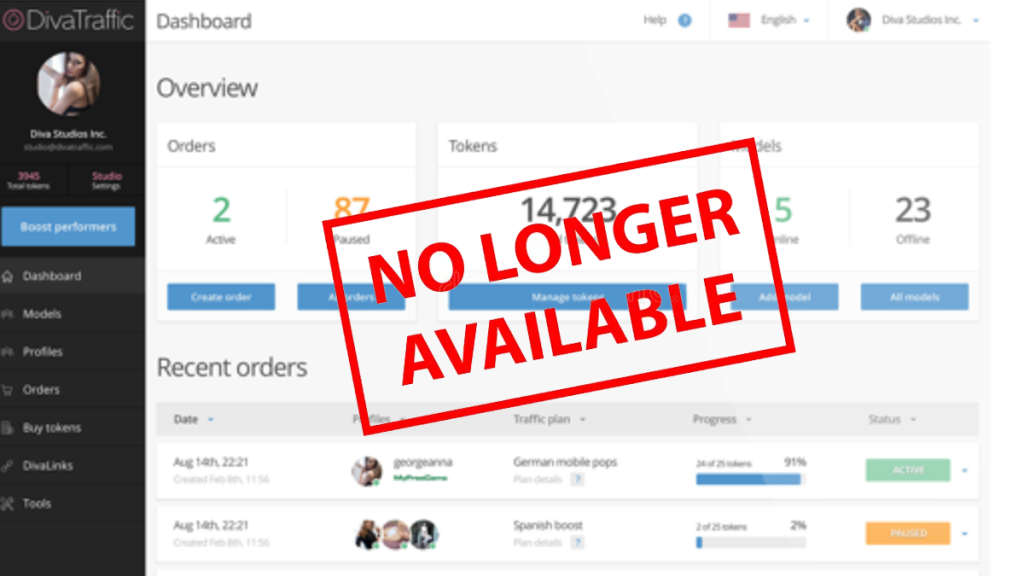
Behind this exit is an announcement posted by the company under the headline “Important Service Update.” Diva Traffic stated that effective February 20, 2026, it will discontinue its operations, including all traffic purchase services. The platform also noted that all previously purchased tokens must be used to activate traffic boost campaigns by that date, and that as of today, token purchases and subscriptions are no longer available.
The shutdown closes the chapter on a brand that, for some, was a useful promotional tool—and for others, a recurring source of controversy. Over time, countless rumors circulated across studios and among models, with many in the community alleging the service relied heavily on bots, fake clicks, and non-human traffic rather than real users.
Whatever side of the debate people were on, the outcome is now the same: a familiar name in cam-focused traffic services is exiting the scene, and studios and creators will need to rethink and adjust their promotion strategies moving forward.
Latest News
Reclaim The Net: Arizona HB 2920 Would Expand Age Checks to Preinstalled Apps
Arizona lawmakers are weighing a sweeping app-store age-verification proposal that would apply not only to app downloads but also to core phone functions most users take for granted, according to Reclaim The Net.
The measure, House Bill 2920, was introduced on January 27, 2026, and is pending before the Arizona House Science & Technology Committee. As described, the bill would require age checks for app store accounts and would also cover preinstalled software and built-in tools such as the web browser, text messaging app, search bar, calculator, and weather widget, effectively placing nearly every piece of mobile software under age-gating requirements.
How HB 2920 would work
Under the proposal, app store providers would be required to determine each account holder’s age category using “commercially available” verification methods. The bill, as reported, does not precisely define what verification methods would qualify, and it assigns the Arizona Attorney General the role of setting rules for acceptable processes.
HB 2920 would divide users into four groups:
- Under 13
- Ages 13–16
- Ages 16–18
- Adults
For anyone under 18, the bill would require the minor’s account to be “affiliated” with a parent account and mandate “verifiable parental consent” before a minor could download or purchase an app or make in-app purchases. Reclaim The Net notes that this consent framework would also extend to preinstalled apps, meaning the first time a minor attempts to open certain default phone functions, the system could require parent approval before access is granted.
A key issue raised in the coverage is that the bill does not specify how parent-child relationships will be verified. Instead, app stores would have wide discretion to determine parenthood via unspecified “commercially reasonable” methods.
Updates could trigger new consent requests
The bill’s scope would extend beyond initial access and downloads. If a developer makes a “significant change” to an application, the proposal would require renewed parental consent before the minor can access the updated version.
In the Reclaim The Net description, “significant change” would include:
- Privacy policy modifications
- Changes to categories of data collected
- Age rating changes
- Adding in-app purchases
- Introducing advertisements
That could mean routine software maintenance becomes a gatekeeping event. A weather app that adds a banner ad, for example, could require fresh parental approval. A note-taking app’s privacy policy update could also trigger a new consent prompt before a minor can keep using it.
To make this system function, developers would be required to notify app stores of “significant changes,” while app stores would need to notify parent accounts and secure renewed permission before restoring access.
Penalties and lawsuits
Reclaim The Net reports that HB 2920 would include civil penalties up to $75,000 per violation, alongside a private right of action allowing parents and minors to sue for $1,000 per violation, plus potential punitive damages. The piece argues these provisions could increase compliance pressure on both app stores and developers.
Because consent status would need to be tracked, app stores would have to collect and maintain records tied to age categories, parental affiliations, verification records, and consent histories, and share age-category data with developers during downloads, purchases, or app launches. While the bill includes language around “industry standard encryption” and limiting data use to compliance purposes, it would still require extensive data collection and transmission to operate as designed.
Comparisons to other states and legal scrutiny
The coverage points to Texas as a recent example of similar legislation. Reclaim The Net notes that a federal judge blocked Texas’ law before it took effect, describing it as comparable to requiring every bookstore to verify every customer’s age and to require parental consent for minors to enter and buy books. The ruling found the law likely unconstitutional, concluding that it imposed content-based restrictions and failed strict scrutiny.
Arizona’s HB 2920 is framed as part of a broader state-level push toward app-store age verification. Reclaim The Net lists Texas, Utah, Louisiana, and California as states that have passed versions of these measures, with different effective dates and enforcement approaches.
HB 2920 is described as going further than most by explicitly covering preinstalled applications, raising the possibility that a minor could purchase a phone and be unable to use built-in tools until a parent account is established and consent is granted.
Proposed effective date
Reclaim The Net reports that if HB 2920 advances through the legislature, it would take effect on November 30, 2026, setting a compliance timeline for app stores and developers.
Latest News
Pornhub: UK Pullout Sparks Fresh Fears Over Online Safety Act “Collateral Damage”
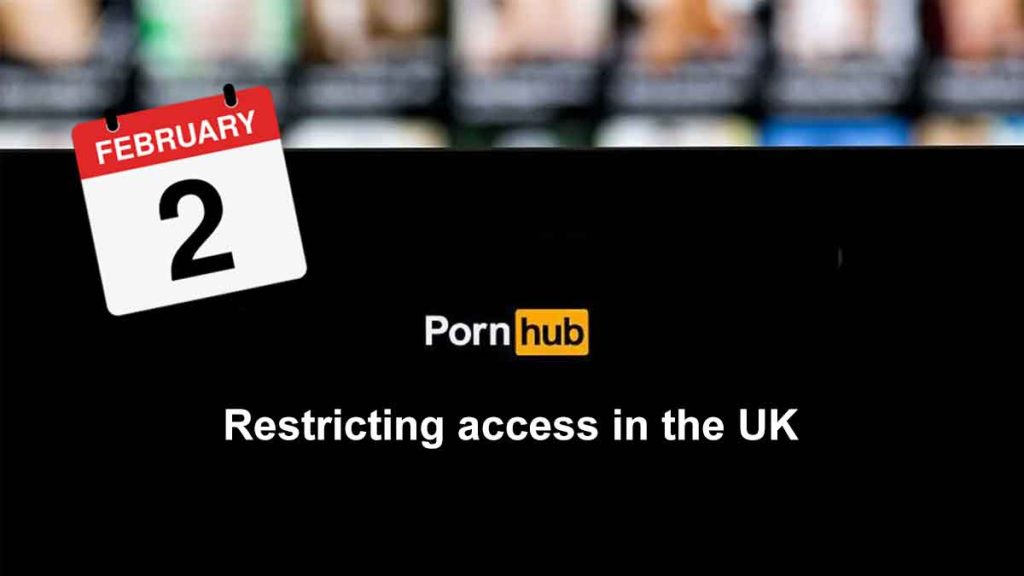
Pornhub says it will block access for new UK users from February 2, 2026 rather than comply with the UK’s Online Safety Act age-check regime, a move that has reignited debate over privacy, overblocking, and whether compliance costs are pushing sites out of the UK market.
Pornhub’s planned UK restrictions are being framed by some commentators as more than an adult-industry headline — and as a warning sign about how the UK’s Online Safety Act (OSA) is reshaping access to the wider internet.
In a City A.M. opinion piece, political journalist Tom Harwood argues that while few will publicly rally to defend Pornhub, the platform’s retreat should be treated as a “canary in the coalmine”: a high-profile example of businesses deciding that operating under the UK’s new compliance environment is no longer worth the risk or cost.
What Pornhub is changing in the UK
According to reporting on the decision, Pornhub’s parent company Aylo plans to restrict the site for UK users who have not already completed age verification, allowing continued access for users who have previously verified and logged in, while blocking new UK users from registering or accessing the site from February 2, 2026. The change is also reported to affect other Aylo-owned sites such as YouPorn and RedTube.
Aylo’s stated objection is that the age-check system is flawed and privacy-invasive, and that compliant sites may be penalized while noncompliant or offshore sites remain accessible — which, it argues, can drive users toward less regulated corners of the web.
Why the UK’s Online Safety Act is at the center
The UK’s Online Safety Act introduces duties aimed at keeping children from accessing online pornography and other harmful content. Ofcom, the UK’s communications regulator, has issued guidance on “highly effective” age assurance and explains that pornography services accessible from the UK must use strong age checks.
Harwood’s argument is that the practical effect of strict age-gating is not limited to minors. If platforms must reliably exclude under-18s, they often end up treating all users as potentially underage unless they provide verification — meaning adults face new friction and may be asked for sensitive proof such as identity or facial scans, depending on the service’s chosen method.
The “overblocking” concern
In his City A.M. column, Harwood claims the OSA’s impact has extended beyond pornography into broader online content, including news and civic material, describing a climate of caution where platforms block first to reduce liability. He also points to smaller community forums reportedly shutting down or restricting access due to compliance burdens.
Separate reporting notes that Ofcom maintains the rules are workable and that many top adult sites have moved toward compliance, but critics argue the incentives created by enforcement and potential penalties can still lead to over-removal and conservative moderation choices — especially for smaller operators without legal and trust-and-safety teams.
VPNs, offshore sites, and unintended outcomes
A recurring theme in both the opinion piece and wider coverage is displacement: if large, regulated platforms pull back, traffic doesn’t necessarily disappear — it may shift to VPNs or to less regulated providers. Recent reporting cited a sharp drop in UK traffic to Pornhub following enforcement and ongoing discussion about VPN circumvention.
Harwood’s central warning is that a “shrinking” UK internet footprint can have knock-on effects: fewer services willing to operate locally, more users adopting workarounds, and a growing gap between what UK users can access easily versus what exists elsewhere online.
Why adult-industry watchers are paying attention
Even for readers who don’t view Pornhub as sympathetic, the story matters because it highlights a broader trend: policy decisions aimed at child safety increasingly shape platform design, identity verification expectations, and operational risk for adult and mainstream sites alike. As enforcement tightens, the competitive advantage may shift toward large platforms that can absorb compliance costs — while smaller publishers and communities face difficult tradeoffs.
For now, Pornhub’s UK move is being watched as a test case: whether age assurance becomes normalized with minimal disruption, or whether more platforms decide the simplest option is to reduce features, restrict access, or exit the market altogether.
Source: theguardian.com

-

 Finance & Business7 months ago
BCAMS Magazine, the 34th issue
-

 Cam Models5 years ago
EmilyJonesChat
-

 Finance & Business7 months ago
BCAMS Magazine, the 33nd issue
-

 Finance & Business9 months ago
BCAMS Magazine, the 32nd issue
-

 Finance & Business10 months ago
BCAMS Magazine, the 31st issue
-

 Finance & Business11 months ago
BCAMS Magazine, the 30th issue
You must be logged in to post a comment Login