
Tech & IT
Forbes: TeamSpeak Adds Capacity After Discord Age-Verification Rollout
TeamSpeak, a voice chat service popular with gamers, is seeing a spike in sign-ups after Discord announced it will require age verification for some users, Forbes reported. The influx has strained TeamSpeak’s infrastructure across multiple regions, including the United States, as users seek alternatives following Discord’s recent update.
In a Feb. 16 update cited by Forbes, TeamSpeak said it added new hosting regions in Frankfurt and Toronto and is expanding capacity in response to an “incredible surge of new users.” TeamSpeak noted that the additional regions are designed to spread demand across more infrastructure rather than restrict where people can connect from, meaning U.S.-based users can still join communities hosted outside the country.
Founded in 2001, TeamSpeak has positioned itself as a privacy-focused alternative to Discord, emphasizing letting communities create and manage their own servers. That approach gives server owners more direct control over hosting choices, moderation policies and how data is handled.
TeamSpeak built its reputation well before Discord’s rise, becoming a staple in PC gaming communities where stable voice communication matters for coordination. The service has been widely used by groups playing multiplayer titles such as World of Warcraft and Overwatch, where clear, low-latency voice chat can be central to team play.
Online forums and gaming communities have reported renewed interest in TeamSpeak since Discord’s age-verification announcement, with some users urging friends and groups to migrate or set up fresh servers. Forbes said it contacted TeamSpeak for additional details on the jump in new users and was awaiting a response.





























Tech & IT
PICO 4 Ultra Review: Sharp Standalone VR with Solid Passthrough
The PICO 4 Ultra is a fully standalone VR headset designed for immersive entertainment, high-resolution video playback, and mixed reality experiences. It improves on the original PICO 4 with stronger performance, sharper visuals and better overall balance.
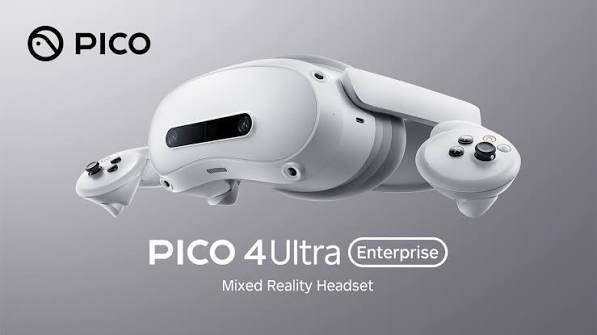
The headset uses the Snapdragon XR2 Gen 2 chipset, putting it in the same performance class as the Meta Quest 3 and Quest 3S. It features 2160 x 2160 resolution per eye, a refresh rate of up to 90Hz, and support for 8192 x 4096 video decoding at 60 FPS, making it capable of handling high-resolution immersive video content.
Compared with the original PICO 4, the Ultra offers faster rendering, brighter visuals, and improved front-to-back weight distribution, which helps during longer sessions. It also ships with controllers, making it ready to use out of the box.
However, comfort is still an area where the PICO 4 Ultra falls slightly behind some competitors. Its rigid headband and stiff face pad can create more pressure during extended use, especially compared with the softer and more refined fit of the Quest 3 and Quest 3S.
Passthrough is one of the PICO 4 Ultra’s strengths. The headset provides a clean color view of nearby surroundings and offers a noticeable improvement over older VR devices. While it does not match the passthrough quality of Apple Vision Pro, it performs well for a standalone headset in its category.
The PICO 4 Ultra can be used with compatible VR apps from the PICO International Store, including media players, immersive video platforms, and mixed reality experiences. Browser-based access is also available for supported web content, giving users multiple ways to enjoy VR without needing a PC.
Overall, the PICO 4 Ultra is a strong standalone headset for users who want sharp visuals, good passthrough and solid performance. Its firmware and ergonomics may not feel as polished as Meta’s Quest lineup, but it remains a capable option for immersive entertainment right out of the box.
Cam Sites
Meta Quest 3 vs Quest 3S: Which VR Headset Is Better for Immersive Content?
Meta’s standalone Quest 3 and Quest 3S are two of the most popular VR headsets for users who want high-quality immersive entertainment without needing a PC or external tracking setup.
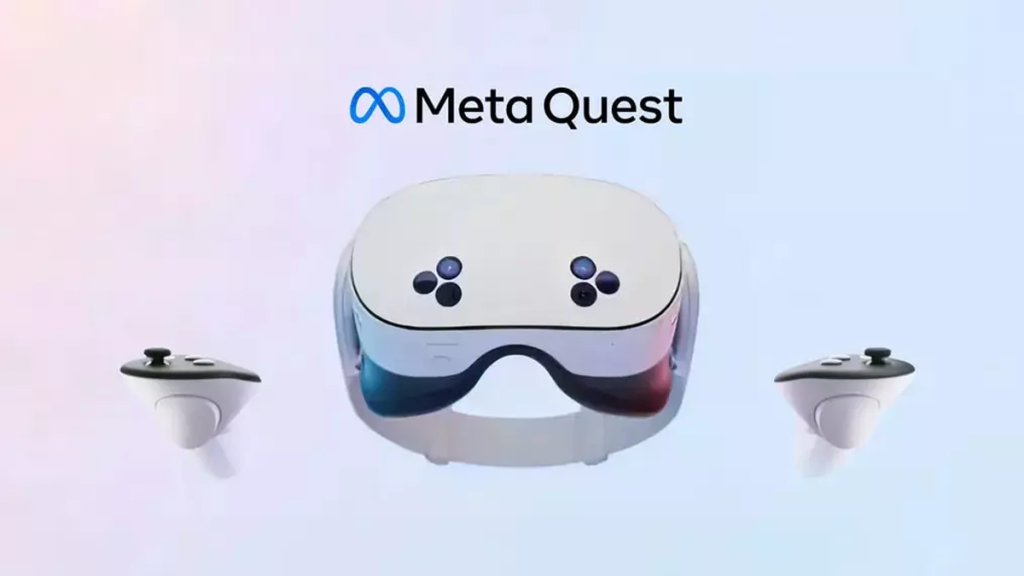
Both headsets share the same core chip and many of the same features, including 120Hz display support, Touch Plus controllers and hand tracking. The biggest difference is visual quality. The Quest 3 is the higher-end option, using sharper pancake lenses and offering a resolution of 2064 x 2208 pixels per eye. The Quest 3S is the more budget-friendly model, with 1832 x 1920 pixels per eye, making some compromises in display clarity to reach a lower price point.
For high-resolution video playback, both headsets are capable devices. They can handle 8192 x 4096 at 60 FPS, making them suitable for 8K immersive video when paired with compatible apps and properly encoded content. This makes either headset a strong option for users focused on detailed, wide-field VR experiences.
Both models also include Touch Plus controllers and support hand tracking, giving users different ways to navigate apps, menus, and media players. This flexibility makes the experience feel more natural, especially when switching between interactive content and video playback.
Passthrough is another important feature. The Quest 3 and Quest 3S use dual 4MP RGB cameras to provide color passthrough, allowing users to see their real-world surroundings while wearing the headset. The experience is useful and practical, though it does not match the sharpness and realism of Apple Vision Pro, which offers richer colors and more detailed environmental visuals.
Battery life remains a practical consideration. In continuous 8K streaming tests, the Quest 3 lasted about 120 minutes, while the Apple Vision Pro lasted about 150 minutes. Apple’s external battery has a larger capacity, but the runtime difference is smaller than the size gap might suggest.
For most users, the choice comes down to budget and image quality. The Quest 3 is the better pick for sharper visuals, clearer lenses, and a more premium viewing experience. The Quest 3S offers much of the same core performance at a lower price, making it a strong option for users who want modern VR features without paying for the highest display quality.
Overall, both headsets are reliable choices for immersive entertainment. Choose the Meta Quest 3 if visual clarity matters most, or the Quest 3S if you want a more affordable entry into standard
Tech & IT
“Bombs and Porn” Debate Highlights Growing AI Concerns
AI data center projects across the United States are facing delays, cancellations, and growing public opposition as concerns rise over energy use, pollution, taxes, and the overall impact of artificial intelligence.

Nearly half of the data center capacity planned for 2026 has reportedly already been delayed or canceled. Local communities and lawmakers are increasingly pushing back against large AI infrastructure projects, with some states introducing restrictions on new developments.
Critics continue to question whether AI is truly improving daily life. Instead, AI tools are frequently associated with fake content, misinformation, cheating in schools, and harmful online material. Concerns also grew after reports connected a suspect in the 2025 shooting at Florida State University to extensive conversations with an AI chatbot before the attack.
The debate also includes concerns about AI being used in military and surveillance operations. AI-powered systems are increasingly being adopted by defense and government agencies, raising ethical and privacy concerns.
Environmental impact remains another major issue. Massive AI data center projects are expected to increase electricity demand significantly, with some companies planning new gas-powered infrastructure to support future expansion. Critics warn this could lead to higher emissions and additional pressure on energy grids.
Public skepticism toward AI also remains high. Recent polls show that many Americans believe AI could negatively affect jobs, education, and everyday life, while large numbers oppose building AI data centers near their communities.
Critics argue that instead of focusing on futuristic promises about “superintelligence,” tech companies and politicians should better explain the practical benefits AI is currently providing to ordinary people.


-

 Finance & Business10 months ago
BCAMS Magazine, the 34th issue
-

 Cam Models5 years ago
EmilyJonesChat
-

 Finance & Business11 months ago
BCAMS Magazine, the 33nd issue
-

 Finance & Business1 year ago
BCAMS Magazine, the 32nd issue
-

 Finance & Business1 year ago
BCAMS Magazine, the 31st issue
-

 Finance & Business1 year ago
BCAMS Magazine, the 30th issue
You must be logged in to post a comment Login