
Latest News
Imgur Banning Nudity and Porn
Imgur is getting ready to eradicate a great deal of erotica from the web. Reddit’s go-to site for sharing pornography will be automatically deleting all adult material.
On May 15, 2023, Imgur, an image-hosting website known for hosting much of the adult content posted to Reddit, intends to prohibit any nudity or sexually explicit material. In the Terms of Service statement banning adult content, the website stated that users must download/save any images they wish to keep if they no longer abide by these Terms. Most prominently, this would involve explicit/pornographic content. To further this, Imgur will be using automated tools and human moderators to purge the site of adult content. The company noted that automated detection software would be used to identify explicit content; though, it is aware of the limitations and issues with relying solely on automated detection, so human moderators will also be utilized.

Most people associate Imgur with Reddit, as it is where many Reddit users host images. These can range from memes to DIY projects and a great many pornographic images and gifs in the myriad of Reddit’s adult communities catering to a variety of interests. The policy change brings Imgur’s Terms of Service in line with its Community Guidelines. Back in 2019, Imgur stopped supporting NSFW subreddits and age-gated adult content and made it “hidden,” but it did not remove any adult content or prevent people from posting it.
The new Terms of Service explain what is no longer allowed on Reddit, and it appears to be tight compared to other online platforms, especially Imgur’s previously lenient policy. Starting May 15, Imgur will no longer permit the gratuitous or explicit display of breasts, buttocks, and sexual organs meant to stimulate erotic feelings, comprehensive or partial nudity, any depiction of sexual activity, explicit or implied, any image taken from or of someone without their knowledge or consent for the purpose of sexualization, solicitation (the unwelcome request of sexual content from another person, or selling/offering explicit content and/or adult services).
Adult content communities on Reddit can easily transfer to other image-hosting sites from this point onwards (RedGifs.com is a popular service in those communities already), but the Imgur policy change should, in theory, erase years of adult content from the web. Much of that content is stolen from adult entertainers but also consists of images and gifs posted by creators to promote their OnlyFans, ManyVids, and other monetizable channels.
Imgur referred to porn as bad for business in its announcement of the change. “Explicit and illegal content have historically posed a risk to Imgur’s community and its business. Disallowing explicit content will allow Imgur to address these risks and protect the future of the Imgur community,” it specified.
“We recognize that these transformations may be disruptive to Imgurians who have used Imgur to store their pictures and artwork,” Imgur said. “These alterations are a significant move in Imgur’s continued attempts to remain a secure and enjoyable space on the internet.”
The post concluded with a gif of a cheerful pup.

Events
Last Spots + International Guests: This Is Lalexpo 2026
The Lalexpo experience keeps growing! A new edition is coming, packed with high-level content, international guests, exclusive spaces, and activities designed to take the industry to the next level.

Ideas Without a Script: Conversations That Make an Impact
Ideas Without a Script is a space designed for real, unfiltered conversations with the people who are transforming the industry. A place where experiences, insights, and stories become inspiration.
In this first edition, the special guest will be Yeferson Cossio, one of the most influential content creators in Latin America, with millions of followers and a massive digital reach. Beyond his success on social media, he has established himself as an entrepreneur, developing high-level projects and collaborations.
A close and relaxed space to hear his stories, insights, and perspectives.
Limited spots available
Price: $84 USD

If you already have your Lalexpo ticket, you get 50% OFF
Get your access and learn more here: https://ideassinlibreto.com/es
Or request more information through Lalexpo’s WhatsApp lines.
Special Guests: Global Talent at Lalexpo
This year, we will host some of the most influential names in the adult entertainment industry worldwide:
Johnny Sins – American actor, director, and content creator, recognized as one of the most popular male talents in the industry. With nearly two decades of experience and over 3,000 productions, he has been inducted into the AVN Hall of Fame and has become a global icon.
Lily Phillips – British actress and content creator who has gained notoriety through her presence on digital platforms and viral projects that have sparked global conversation.
Jason Luv – Actor, director, and producer from Houston, known for his versatility and strong global positioning. In 2026, he surpassed one billion views, reinforcing his impact on the industry.
Yusuf Gattouz – Algerian model known as Gattouz, who has quickly positioned himself among the most viewed male talents worldwide, with hundreds of millions of views.
Lalexpo Awards: Voting Is Now Open
The official Lalexpo Awards voting is now live.

You can now support your favorites by logging into your profile and participating in the selection of the winners.
Vote here: https://lalexpo.com/awards/vote
Additionally, tables for the awards ceremony are now available:
Table for 8 people: $530 USD
Includes dinner and an exclusive gala experience.
Official Dress Code: Get Ready for the Parties
Lalexpo nights are a key part of the experience. Here’s the dress code for each event:
Chaturbate Neon Pool Party – Neon / Glow
Jasmin Colombian Carnival Party – Red
Bongacams Pink Paradise Party – Beach Pink
Get ready for three unforgettable nights of celebration and unique experiences.
Download the Official Lalexpo App
To attend Lalexpo, you must download the official app, as it is where you will present your event ticket.

Download it here:
Play Store: https://play.google.com/store/apps/details?id=com.latamoutsourcing.events
App Store: https://apps.apple.com/co/app/latam-events/id6740163419
Through the app, you will also be able to:
- Check the full schedule in real time
- Explore sponsors and connect with them
- Manage spots for activities such as BBQ and chivas
- Participate in dynamics like “Win with Lalexpo”
- Receive all event updates
All in one place, right in the palm of your hand.
Lalexpo is not just an event, it is the meeting point where the industry connects, evolves, and creates new opportunities.
Get ready for an edition that will bring together global talent, unique experiences, and moments that will make a difference.
See you at Lalexpo 2026
Latest News
Diva Traffic: Traffic Services Shut Down on February 20, 2026
Everything is changing in the camming industry. As a clear example, after years of being known as a traffic company—especially for promotion within the adult cams space—2026 is the year the industry says goodbye to Diva Traffic!
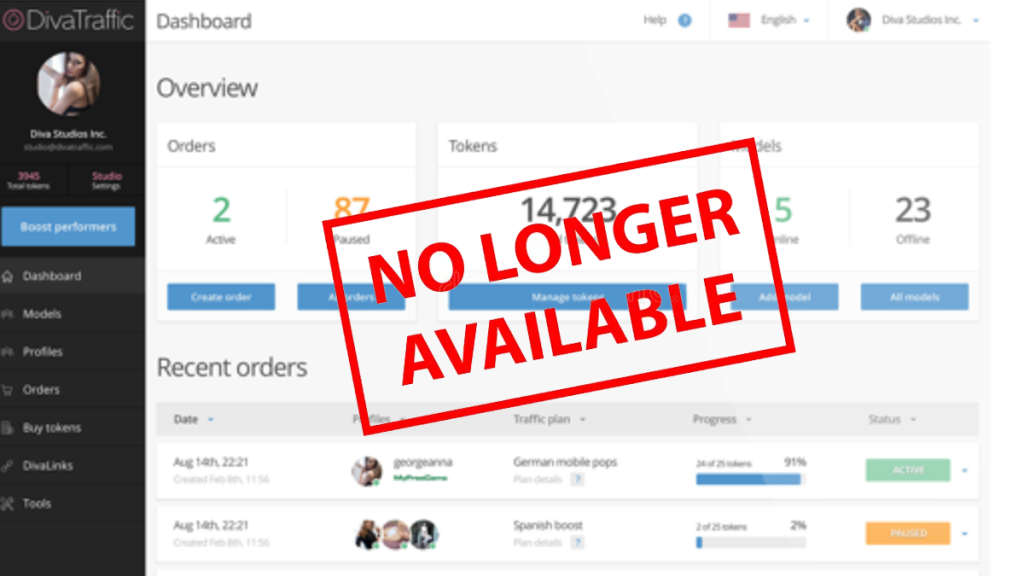
Behind this exit is an announcement posted by the company under the headline “Important Service Update.” Diva Traffic stated that effective February 20, 2026, it will discontinue its operations, including all traffic purchase services. The platform also noted that all previously purchased tokens must be used to activate traffic boost campaigns by that date, and that as of today, token purchases and subscriptions are no longer available.
The shutdown closes the chapter on a brand that, for some, was a useful promotional tool—and for others, a recurring source of controversy. Over time, countless rumors circulated across studios and among models, with many in the community alleging the service relied heavily on bots, fake clicks, and non-human traffic rather than real users.
Whatever side of the debate people were on, the outcome is now the same: a familiar name in cam-focused traffic services is exiting the scene, and studios and creators will need to rethink and adjust their promotion strategies moving forward.
Latest News
Reclaim The Net: Arizona HB 2920 Would Expand Age Checks to Preinstalled Apps
Arizona lawmakers are weighing a sweeping app-store age-verification proposal that would apply not only to app downloads but also to core phone functions most users take for granted, according to Reclaim The Net.
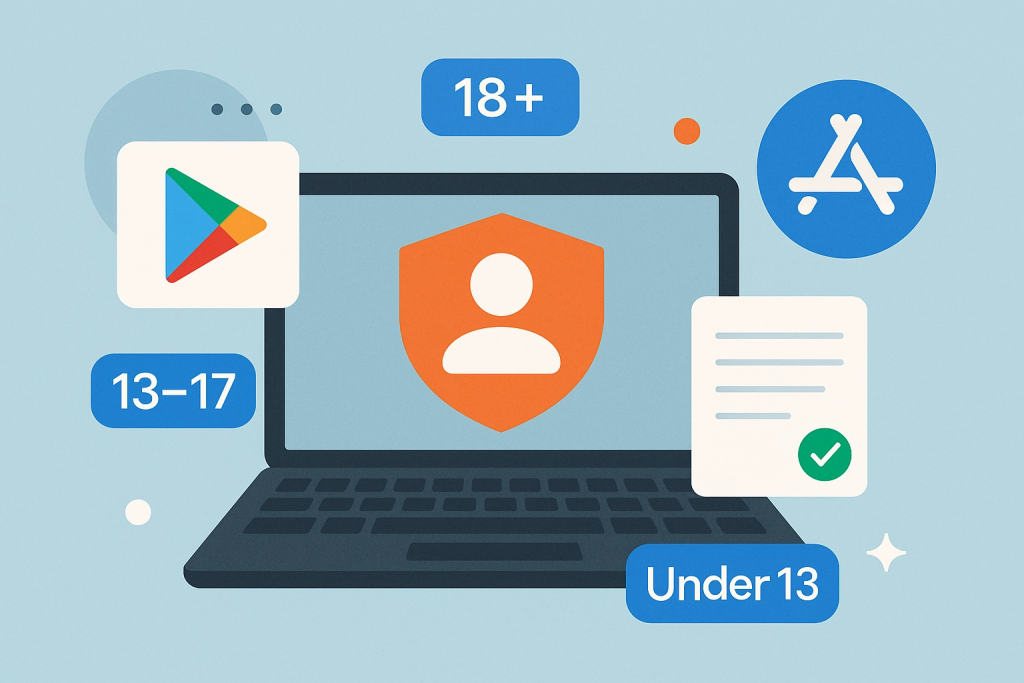
The measure, House Bill 2920, was introduced on January 27, 2026, and is pending before the Arizona House Science & Technology Committee. As described, the bill would require age checks for app store accounts and would also cover preinstalled software and built-in tools such as the web browser, text messaging app, search bar, calculator, and weather widget, effectively placing nearly every piece of mobile software under age-gating requirements.
How HB 2920 would work
Under the proposal, app store providers would be required to determine each account holder’s age category using “commercially available” verification methods. The bill, as reported, does not precisely define what verification methods would qualify, and it assigns the Arizona Attorney General the role of setting rules for acceptable processes.
HB 2920 would divide users into four groups:
- Under 13
- Ages 13–16
- Ages 16–18
- Adults
For anyone under 18, the bill would require the minor’s account to be “affiliated” with a parent account and mandate “verifiable parental consent” before a minor could download or purchase an app or make in-app purchases. Reclaim The Net notes that this consent framework would also extend to preinstalled apps, meaning the first time a minor attempts to open certain default phone functions, the system could require parent approval before access is granted.
A key issue raised in the coverage is that the bill does not specify how parent-child relationships will be verified. Instead, app stores would have wide discretion to determine parenthood via unspecified “commercially reasonable” methods.
Updates could trigger new consent requests
The bill’s scope would extend beyond initial access and downloads. If a developer makes a “significant change” to an application, the proposal would require renewed parental consent before the minor can access the updated version.
In the Reclaim The Net description, “significant change” would include:
- Privacy policy modifications
- Changes to categories of data collected
- Age rating changes
- Adding in-app purchases
- Introducing advertisements
That could mean routine software maintenance becomes a gatekeeping event. A weather app that adds a banner ad, for example, could require fresh parental approval. A note-taking app’s privacy policy update could also trigger a new consent prompt before a minor can keep using it.
To make this system function, developers would be required to notify app stores of “significant changes,” while app stores would need to notify parent accounts and secure renewed permission before restoring access.
Penalties and lawsuits
Reclaim The Net reports that HB 2920 would include civil penalties up to $75,000 per violation, alongside a private right of action allowing parents and minors to sue for $1,000 per violation, plus potential punitive damages. The piece argues these provisions could increase compliance pressure on both app stores and developers.
Because consent status would need to be tracked, app stores would have to collect and maintain records tied to age categories, parental affiliations, verification records, and consent histories, and share age-category data with developers during downloads, purchases, or app launches. While the bill includes language around “industry standard encryption” and limiting data use to compliance purposes, it would still require extensive data collection and transmission to operate as designed.
Comparisons to other states and legal scrutiny
The coverage points to Texas as a recent example of similar legislation. Reclaim The Net notes that a federal judge blocked Texas’ law before it took effect, describing it as comparable to requiring every bookstore to verify every customer’s age and to require parental consent for minors to enter and buy books. The ruling found the law likely unconstitutional, concluding that it imposed content-based restrictions and failed strict scrutiny.
Arizona’s HB 2920 is framed as part of a broader state-level push toward app-store age verification. Reclaim The Net lists Texas, Utah, Louisiana, and California as states that have passed versions of these measures, with different effective dates and enforcement approaches.
HB 2920 is described as going further than most by explicitly covering preinstalled applications, raising the possibility that a minor could purchase a phone and be unable to use built-in tools until a parent account is established and consent is granted.
Proposed effective date
Reclaim The Net reports that if HB 2920 advances through the legislature, it would take effect on November 30, 2026, setting a compliance timeline for app stores and developers.

-

 Finance & Business8 months ago
BCAMS Magazine, the 34th issue
-

 Cam Models5 years ago
EmilyJonesChat
-

 Finance & Business8 months ago
BCAMS Magazine, the 33nd issue
-

 Finance & Business10 months ago
BCAMS Magazine, the 32nd issue
-

 Finance & Business11 months ago
BCAMS Magazine, the 31st issue
-

 Finance & Business1 year ago
BCAMS Magazine, the 30th issue
You must be logged in to post a comment Login