
Tech & IT
Airbnb’s Hidden Camera Problem Exposed
A recent CNN article about a disturbing pattern has emerged in Airbnb rentals: guests are being secretly recorded by hidden cameras. Despite numerous cases and thousands of complaints, Airbnb has consistently failed to notify law enforcement and protect its guests, allowing hosts to violate privacy without consequence. This report delves into Airbnb’s lack of accountability and the persistent threat of hidden cameras.
Another victim’s fun-filled vacation turned into a nightmare when she was secretly recorded undressing at a rental property. Her images were stored on the computer of an alleged predator accused of spying on unsuspecting renters for years.
Airbnb, one of the world’s largest short-term rental companies, has faced this scenario before. Typically, the company seeks to settle hidden camera cases quickly and confidentially. But this time, things played out differently.
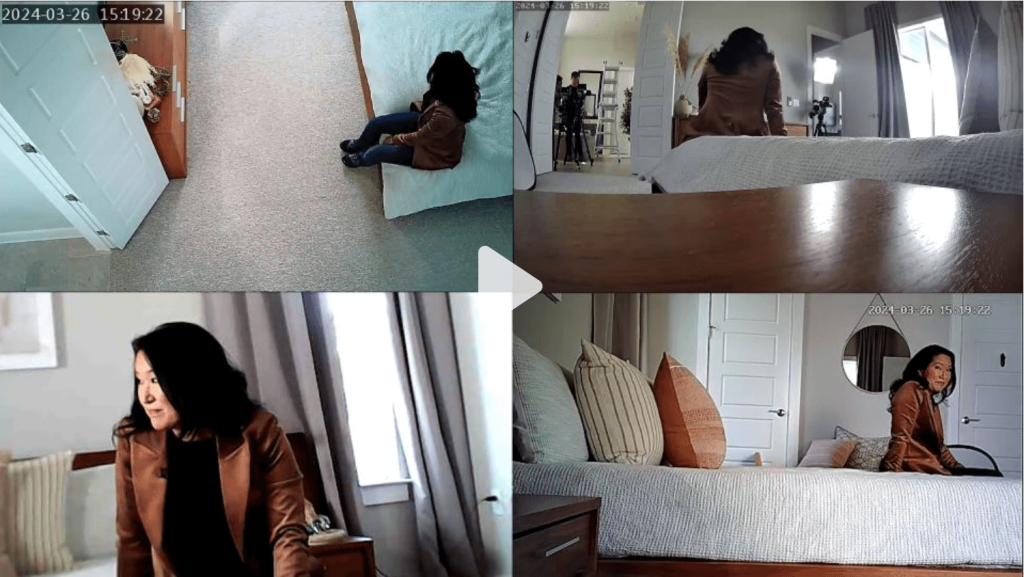
An Airbnb representative, testifying at a court-ordered deposition early last year, offered a rare glimpse into the company’s hidden camera problem. Airbnb has generated tens of thousands of customer support tickets related to surveillance devices in the last decade.
During the hours-long deposition, the Airbnb employee revealed that when a guest complains of a hidden camera, the company doesn’t notify law enforcement, even if a child is involved. Instead, they may reach out to hosts about complaints, which law enforcement experts say can hinder criminal investigations by giving suspects time to destroy evidence.
A CNN investigation found that Airbnb consistently fails to protect its guests, despite knowing hidden cameras are a persistent concern within its industry. Airbnb’s corporate strategies aim to prevent regulation of the short-term rental market, allowing the company to distance itself from responsibility for guest safety and privacy.
Thousands of images have been recovered from short-term rental hosts by law enforcement. Hidden cameras placed in bedrooms and bathrooms capture guests during their most private moments – changing clothes, being with their children, even having sex, according to court and police records and interviews with nearly two dozen guests who found surveillance devices at rental properties or were informed by police they had been secretly recorded.
Victims live under a shadow of fear that their private moments will become internet fodder. “This is not my Social Security number or my email address. This is my naked body,” said one woman whose host secretly recorded her having sex with her husband at a cottage in Texas.
Airbnb declined CNN’s request for an interview but stated in a written statement that hidden camera complaints are rare. When they do occur, “we take appropriate, swift action, which can include removing hosts and listings that violate the policy.” The spokesperson added that “Airbnb’s trust and safety policies lead the vacation rental industry and include background checks on US-based hosts and guests.”
However, some policies touted by Airbnb come with significant disclaimers. The company’s website advises users not to rely on its background checks to identify “all past criminal convictions or sex offender registrations … or other red flags.” Even convictions of “murder, terrorism, rape or child molestation” are not automatic disqualifiers under Airbnb’s policy.
Airbnb’s origins trace back to 2007 when co-founders Brian Chesky and his roommate, struggling to make rent in San Francisco, opened their home to travelers. Thirteen years later, the company went public with a valuation of $47 billion. Today, Airbnb is valued higher than Hyatt Hotels Corporation and Marriott International combined. Unlike hotels, Airbnb doesn’t control the properties it advertises or employ on-site staff like security guards or receptionists. It leaves hosts with the costs of maintaining and protecting short-term rentals.
While hotels can be held legally responsible for guests harmed on their property, Airbnb often is not. The company has fought against such liability in court, arguing it has little control over what happens at its listings despite collecting roughly 17% of each booking.
The short-term rental industry often highlights how home sharing improves human connection and offers intimate, private spaces for travelers. Yet, violent crime, prostitution, and traveler deaths have repeatedly forced Airbnb and its competitors into the international spotlight.
One unchecked security concern is hidden cameras. Airbnb has known about this problem for at least a decade and has repeatedly notified its shareholders of the issue in annual reports since going public.
Despite these concerns, Airbnb has allowed video surveillance by hosts in common areas, provided the cameras are disclosed to guests. However, guests like Chloe LeBrument, who found a hidden camera in a charger in her rental’s bedroom, feel betrayed and violated. LeBrument’s host has been criminally charged with voyeurism.
In January, CNN began reaching out to former Airbnb employees about hidden camera concerns. In early March, Saturday Night Live mocked the issue in a skit. Just over a week later, Airbnb announced it would ban all indoor cameras as of April 30 but did not detail how it would enforce this rule.
“You can have all these great rules, but if no one’s checking that the rules are being followed … it’s still kind of the Wild West,” said attorney Bianca Zuniga-Goldwater, who represents several hidden camera victims in suits against Airbnb and Vrbo.
Despite the company’s efforts to contain complaints, the fear of hidden cameras remains a significant issue for guests. As Airbnb continues to grow, addressing and enforcing strict privacy protections will be crucial to ensuring the safety and trust of its users.
Source: CNN

Tech & IT
Italy (AGCOM): Mandatory age checks on adult sites start Nov 12
Italy’s communications regulator, AGCOM, will enforce mandatory age verification for pornography websites starting November 12, 2025. The system is designed to block access by minors and relies on certified third parties (such as banks or mobile operators) to confirm whether a visitor is 18+. After verification, the third party issues an access code that lets the user proceed to the site.

AGCOM describes a “double anonymity” model: adult sites receive only an “of-age” confirmation and never the user’s identity, while verifiers do not see which website the person is trying to access. According to the rules, the check is required on every visit, not just once.
An initial enforcement list covers around 50 services, including major platforms that host or distribute pornographic content in Italy. Sites found non-compliant can face penalties of up to €250,000.
What changes in practice
- Start date: November 12, 2025.
- Who verifies: Certified third parties that already hold user identity data.
- What sites see: Only that a user is of age, not who they are.
- Frequency: Verification is required each time a covered site is accessed.
- Enforcement: Fines up to €250,000 for failures to comply.
Italy’s move aligns with broader European efforts to implement age-assurance on adult content. Platforms operating in the country are expected to finalize integrations with certified providers and update user flows to meet the deadline, while users should anticipate an extra verification step before entering affected sites.
Cam Sites
Discord: ID photos of 70,000 users may have been exposed via third-party breach
Discord says official ID photos and other data tied to about 70,000 users may have been exposed after a cyber-attack on an external provider used for age verification and customer support. The company, which reports more than 200 million users globally, said on 9 October 2025 that its own platform was not breached and that access for the affected vendor has been revoked.

According to Discord, the leaked information could include personal details, ID images submitted for age checks, partial credit-card data, and messages exchanged with customer support agents. The company added that no full card numbers, account passwords, or messages beyond support conversations were involved. Impacted users have been notified, and the firm says it is cooperating with law-enforcement authorities.
Discord did not name the third-party provider. A representative from Zendesk, which provides customer-service software to Discord, told the BBC its systems were not compromised and that the incident was not caused by a Zendesk vulnerability. Discord also rejected online claims that the breach was larger than stated, calling them inaccurate and “part of an attempt to extort payment,” and clarified that the incident was not a ransomware attack: “We will not reward those responsible for their illegal actions,” a spokesperson said.
The incident underscores why attackers target high-value personal data—such as full names and government-issued identifiers—that tend to remain constant over time and are useful in scams. Discord has tightened age-verification practices in recent years amid concerns about the distribution of prohibited content on some servers and says it continues to invest in safety and verification controls.
Tech & IT
Valve Deckard: What It Could Mean for VR Adult Content
The Deckard is an upcoming VR headset from Valve, expected to launch in the next few months. If current leaks hold, it could be a major upgrade for immersive adult viewing.
Launch timeline. Chinese analyst group XR Research Institute suggests Deckard is targeting the holiday season, with projected annual production of 400k–600k units, comparable to early Vision Pro volumes.
Pricing. Expectations point to a premium ($1,000+) price tier paired with high-end performance.
Why it matters for VR erotica (platform-agnostic):
- Display tech. High-resolution OLED/LCD panels with strong contrast and color should elevate skin tones, low-light scenes, and fine detail.
- Input & tracking. Newly referenced “Roy” touch-style controllers in SteamVR code hint at better ergonomics and precision—useful for interactive experiences.
Deckard features (per code dives/leaks):
- Standalone + PCVR hybrid. Emphasis on wireless PC streaming for 6K/8K playback without tether drag, alongside native PCVR.
- Comfort & design. Ergonomic improvements aim at longer, more comfortable sessions.
App compatibility. Popular VR video apps (e.g., PCVR players and standalone viewers) are expected to work seamlessly with Deckard, based on typical SteamVR support patterns and developer indications.
Bottom line: if Valve delivers on display quality, wireless PCVR, and ergonomics, Deckard could become a flagship device for high-bitrate adult VR—without locking users to any single platform.
Source: sexlikereal.com


-

 Cam Models4 years ago
EmilyJonesChat
-

 Finance & Business2 months ago
BCAMS Magazine, the 34th issue
-

 Finance & Business3 months ago
BCAMS Magazine, the 33nd issue
-

 Finance & Business4 months ago
BCAMS Magazine, the 32nd issue
-

 Finance & Business5 months ago
BCAMS Magazine, the 31st issue
-

 Finance & Business7 months ago
BCAMS Magazine, the 30th issue
You must be logged in to post a comment Login